



The Data Behind the Behavioral Health Workforce Shortage
Pre-COVID, 20% of Americans—about 50 million people—were living with a behavioral health condition. During the pandemic, that number surged, with nearly one in three adults reporting that they experienced symptoms of anxiety or depression. While those levels have eased since the height of the pandemic, they remain far above pre-COVID rates. Tens of millions of adults continue to report mental health challenges each year.
In other words, we are still in a national behavioral health crisis.
The pandemic not only drove up demand; it also revealed just how fragile the system is. Access, quality, and administrative overload remain the defining challenges of behavioral health today. And for people trying to get help, the unfortunate reality hasn’t changed much: You’re likely in for a long wait.
Even prior to the pandemic-era surge in demand, the U.S. faced a massive shortage of behavioral health clinicians. Back in 2013, the Department of Health and Human Services included the nation’s shortage of healthcare workers—including behavioral health—as a strategic goal, citing 64 million people living in an area with a shortage. By 2021, SAMHSA data showed the consequences: Nearly one in four adults with mental illness reported an unmet need for care, highlighting the ongoing gap between demand and access.
More recently, the picture has grown even more concerning. In 2024, there were 320 individuals for every one mental health provider in the US. And federally designated Mental Health Professional Shortage Areas covered more than 122 million people, with only 27% of the need being met.
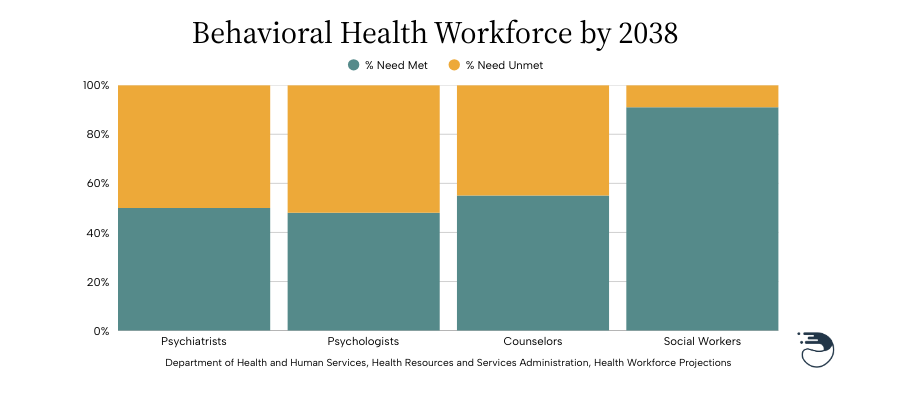
Looking ahead, federal workforce projections suggest the imbalance will persist. By 2038, supply will only cover about 50% of the need for psychiatrists, 48% for psychologists, and 55% for mental health counselors—leaving substantial access gaps across the behavioral health system.
The Behavioral Health Workforce Reality
When someone decides they need help, they usually need it right away. But the workforce supply hasn’t caught up with demand, and as you can see, forecasts indicate it won’t for years. The gap between the number of people asking for care and the number of clinicians available to provide it is still one of the biggest challenges in behavioral health.
And even when the positions are filled, many clinicians aren’t staying. With the continued administrative burden and high demand, many behavioral health providers are burnt out and exiting the field. In fact, more than nine in 10 behavioral health workers (93%) said they have experienced burnout, and nearly half (48%) say staffing shortages have prompted them to consider other jobs.
High turnover then disrupts continuity of care and costs organizations upwards of hundreds of thousands of dollars each year.
One way to bridge the divide is by tackling the bottlenecks that keep the care process from moving faster. A big one is documentation. Clinicians spend, on average, about 35% of their time on paperwork—roughly 16 minutes per patient encounter. Even modestly reducing that burden could free up countless hours. Scaled nationally, that reclaimed time could translate into far greater access to care.
How Technology Can Help
Artificial intelligence (AI) won’t solve the behavioral health workforce shortage, but it can meaningfully reduce the pressures that are pushing clinicians out of the field while speeding up the paperwork that impedes care.
One of the most immediate opportunities lies in reducing administrative burden, particularly around documentation and compliance. Advances in AI have made it possible to capture and structure clinical documentation as care is delivered, rather than after hours. By automating routine note-taking and surfacing required elements in real time, these tools can help clinicians spend less time on paperwork and more time with clients—improving outcomes and reducing burnout.
Learn how Coleman Health Services slashed provider documentation by 70% with Eleos.
Just as importantly, AI-enabled documentation can support clinical quality and compliance at scale. Instead of relying on retrospective chart reviews or manual audits, organizations can gain timely visibility into whether required elements are being addressed, evidence-based practices are being documented, and supervision needs are emerging. That enables earlier support and reduces the downstream risk associated with incomplete or inconsistent documentation.
See how organizations like Merakey and Grand Mental Health have been able to audit 20x more notes with AI.
Over time, easing these operational pressures can have a meaningful impact on workforce stability. When clinicians are not forced to choose between documentation and self-care, or between compliance and presence with clients, they are more likely to join the field—and stay in it.
Closing the Workforce Gap
Perhaps most importantly, technology offers a path to better care for more people—without asking clinicians to do the impossible. One-to-one treatment alone will never meet the full scale of behavioral health need, but digital tools can help extend clinicians’ impact by reducing the operational friction that limits how and when care is delivered.
Closing the gap between the clinicians we have and the clinicians we need requires more than new hires. It demands new ways of working—ways that protect clinical time, reduce administrative burden, and support high-quality care.
When applied thoughtfully, AI can help free up clinicians’ time, strengthen documentation and compliance, and reduce the burnout that drives turnover. In doing so, it enables organizations to expand access while keeping human care firmly at the center of the system.
If you’re ready to see how AI can support your team and help combat the behavioral health workforce shortage, request a personalized Eleos demo today.