

We’re not a regular AI platform; we’re a cool AI platform. (If you get the reference, we salute you.😉🎬)
Millennial jokes aside, what we really mean is that our AI solutions are built differently. We aren’t just a tool that providers use to speed up their notes. We’re a true partner who constantly listens to—and adapts our platform to meet the needs of—the clinicians we serve (and the clients and patients they care for every day).
That’s why every Eleos product and feature is shaped by the very people who understand what care delivery actually looks like.
Two Eleos teams play a critical role in bringing this unique approach to life: Customer Insights and Clinical Experts. Together, they ensure all of our solutions are clinically validated and genuinely useful in real-world settings.
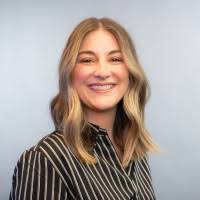
We sat down with Amanda Rankin, who heads up our Customer Insights team, and Natalia Szapiro, who leads the Clinical Experts team, to talk about how their work influences product design—and why clinician involvement is non‑negotiable when building specialized AI for behavioral health, substance use disorder (SUD) treatment, and care at home.
Meet the Team
Can you briefly introduce yourself and your role at Eleos?
Amanda Rankin:
I’m Amanda Rankin, and I lead Customer Insights at Eleos. I’m also a licensed clinical social worker with over 20 years of experience in community mental health. I’ve worn a lot of hats—therapist, manager, director, and COO in a community mental health center—so I know the landscape well. I’ve worked in settings ranging from residential programs and probation services to inpatient psychiatric care and crisis programs.
I joined Eleos to help shape tools that actually fit the realities of behavioral healthcare and reduce the documentation burden for clinicians.
Natalia Szapiro:
I lead the Clinical Experts team at Eleos. Before joining, I had just completed my master’s in clinical and educational psychology. I actually came to Eleos by coincidence—a friend mentioned a part‑time data annotation role—but what kept me here was something much bigger.
It was love at first sight. I fell in love with Eleos’ mission and with the challenge of bringing AI into the mental health space responsibly. The opportunity to focus my work on innovation, while preserving the richness and integrity of clinical care, is priceless.
What is your team’s day-to-day focus?
Amanda:
Our work in Customer Insights centers on gathering real‑world feedback from clinicians and care teams using Eleos and then translating that insight into product improvements and new features. We run discovery sessions, partner closely with product teams, and work with customer‑facing teams to ensure everyone at Eleos understands the workflow realities and constraints our customers face.
The goal is simple: Build tools clinicians actually trust, adopt, and want to use.
Natalia:
On the Clinical Experts side, we partner with the data science team throughout the full development process. Day to day, we focus on defining, monitoring, and improving the clinical quality of our AI.
That includes operationalizing clinical concepts, writing detailed clinical quality policies, reviewing and tagging model outputs, and supporting quality‑based decision making. We also create mock data when needed and generate large volumes of labeled data to move projects forward—always with clinical accuracy and responsibility at the forefront.
Read more about how Natalia’s team works with Eleos data engineers to build behavioral health-specific AI.
How do your roles work together?
Amanda & Natalia:
Amanda’s team brings the voice of the customer and the realities of care delivery—what’s happening in the field, where friction exists, and what builds trust. The Clinical Experts team translates clinical standards and nuance into guidance that the AI can responsibly follow.
Together, we help product and engineering teams turn real‑world behavioral health, SUD, and care at home needs into features that are usable, ethical, and adoptable.
How Our In-House Clinical Experts Shape Product Design
How does your team influence the way Eleos products are designed and built?
Amanda:
Well, without our team, the product might look good on paper, but it wouldn’t fit into the messy reality of health care. We bring context—understanding who’s using it, what their day looks like, and what compliance or workflow realities they face.
Without this perspective, you’d have something technically sound, but misaligned with clinicians’ real needs.
Natalia:
My team’s impact leads to a similar outcome, but from a different angle. Without the Clinical Experts team, the product would lack the nuance required in clinical settings—and there would be no oversight of the AI’s quality and accuracy.
You might still get a polished tool with impressive features, but its outputs wouldn’t align with what clinicians actually need.
What does it mean, in practice, to build AI that’s truly “specific and relevant” to behavioral health, SUD treatment, and care at home?
Amanda:
It means recognizing the unique language, workflows, and compliance needs of these settings. For SUD, that might mean supporting group sessions. For community mental health centers, it might mean understanding the nuanced biopsychosocial assessments that come with serving the complex needs of Medicaid recipients.
These complexities can’t be an afterthought—they have to be built into the product from the start.
Natalia:
It also means acknowledging the limitations of AI. Accuracy and professional judgment come first in this field. We have to be clear about what AI can and can’t do, and design workflows that respect those boundaries rather than assuming capabilities that don’t exist.
Can you share an example of customer or clinical feedback that shaped a product decision?
Amanda:
When we were developing our Groups feature, early users told us our initial documentation structure created friction. It didn’t reflect how group sessions actually flow.
We adjusted the design to better match real‑world workflows, and adoption improved significantly—because the feature finally felt like it was built for clinicians’ day‑to‑day reality.
The Balance Between Technology and Real-World Care
What’s something about real-life therapy or operations that’s hard to capture in technology—but essential to get right?
Amanda:
One challenge is the historical context of the clinical relationship. Clinicians often incorporate historical knowledge that isn’t explicitly stated in a session. If a client mentions “Mary,” the clinician may already know Mary is their supervisor—but unless that context is spoken aloud, AI doesn’t have access to it. This is one of many reasons we believe strongly in keeping a human in the loop.
Operational realities also matter. Care settings deal with interruptions, crisis walk‑ins, high caseloads, staff turnover, and changing payer requirements. If a product assumes a perfect, static workflow, adoption will fail—even if it looks good on paper.
Natalia:
Another challenge is nuance. The same statement can have very different clinical relevance depending on the setting, clinician, and treatment goals.
A simple statement, like a client mentioning they are moving to a new apartment, might seem similar across different behavioral health settings, but its clinical meaning is entirely context-dependent. For a case manager, this might be a crucial housing stability conversation. For a therapist focused on trauma, it might be a less essential preamble to the real clinical work.
Getting the AI to understand that the same conversational content has different clinical relevance based on the type of clinician, the specific setting, and the client’s treatment goals requires clinical oversight.
We have to ensure our AI models can recognize the subtle, specific cues that define what is clinically critical versus what is merely conversational.
How do you ensure Eleos supports clinicians rather than replacing their expertise?
Amanda:
Eleos is designed to support clinicians by reducing administrative burden and surfacing useful structure, always keeping the clinician in control. Our tool acts as a support—helping clinicians document faster, maintain compliance, and focus more on the client.
Clinicians remain the decision-makers; the AI is never a substitute for clinical reasoning.
A good example is our recent integration of ASAM insights into assessment and group suggestions. The market expressed a strong need for ASAM support, and our clinical insights team allowed Eleos to understand the nuance. Organizations were not asking us to replace clinical decision-making by having the AI score an ASAM or make level-of-care recommendations, as this is clearly a clinical decision best made by trained clinicians. And that distinction matters.
Instead, we recognized that the primary need was to relieve the mental burden of classifying relevant content from a one to three-hour service into the six ASAM domains. This feature allows clinicians to quickly surface key information to inform ASAM scoring and level-of-care decisions.
Natalia:
This is a principle that guides all of Eleos: We would never try to replace the clinician.
Our focus is on reducing the burden on clinicians, not replacing them. We merely give them tools to automate the tasks that take them away from the important work. We insist on workflows that allow the clinician to remain the decision-maker.
Trust, Safety, and Responsibility
Why is direct clinician and customer input so important when building AI for behavioral health, SUD, and care at home?
Amanda:
Addressing healthcare challenges requires more than a simple technical solution. It requires a clinical, operational, ethical, and human approach. Incorporating direct input from clinicians and customers is vital. It ensures our product genuinely meets the needs of care teams, complies with documentation standards, and avoids introducing unnecessary risks or burdens. This is the foundation for building a tool that earns trust and is genuinely valued by clinicians.
For example, when clinicians who are constantly on the move requested a simpler way to quickly record notes about a service they had just delivered, we responded. After carefully considering the specific use case and workflow, we developed a voice summary feature to support our users throughout their day.
Read more about Amanda’s past role with Trilogy and their story of beating field-based provider burnout.
Natalia:
Technical teams understand AI limitations. Clinicians understand care delivery constraints. Having both perspectives in‑house allows us to bridge those worlds responsibly.
What are the risks of building clinically focused AI without clinician collaboration?
Amanda:
You end up with tools people don’t use—because the value doesn’t outweigh the friction of adoption.
Natalia:
You risk letting technological limitations define what the product can do, instead of shaping technology around clinical needs.
How do you approach ethical responsibility when working with sensitive clinical material?
Natalia:
Whenever possible, we avoid using sensitive data and rely on mock data for research and testing. When sensitive information is required, it’s handled with the utmost care.
As clinicians ourselves, we deeply respect the responsibility that comes with protecting data and earning trust.
What’s Ahead
As Eleos grows, what are the non‑negotiables?
Amanda:
Clinical credibility and customer partnership. We can’t lose the habit of staying close to real users and real care settings. Another non-negotiable is building responsibly—privacy, safety, and trust aren’t add-ons. And we have to preserve usability: If it adds burden, clinicians won’t use it, no matter how advanced it is.
We are constantly listening for ideas about the unmet needs of our customers and thinking about how we can meet them.
It’s why we are paying close attention to H.R.1 and already thinking with our customers about how Eleos can support them as they support their clients through the changes in redetermination timelines and expectations.
Natalia:
Agreed. Couldn’t have said it better myself.
What excites you most about where Eleos is headed?
Amanda:
I’m excited that Eleos is building the flexibility to support more providers in more settings, while staying grounded in the realities of behavioral health.
In community mental health, during the clinician shortage, I said, ‘No one is coming to save us.’ We had to protect our clinical staff from burnout and keep care moving in very complex environments. Eleos helps by reducing administrative burden and supporting teams where the pressure is highest.
I also think we’re entering another ‘no one is coming’ moment—especially as CMHCs are expected to help vulnerable clients stay covered through things like H.R. 1’s more frequent Medicaid redeterminations.
I want Eleos to be that backbone support: Helping organizations keep people in care without breaking the people delivering it.
Natalia:
I’m excited to keep bringing innovation into these worlds, making our product more flexible and expanding our support to more and more types of providers. This brings in new challenges and a whole new world of context that I’m personally super excited to learn more about and challenge the AI further. I hope to continue building a tool that ultimately drives more human connections.
Interested in how Eleos builds clinically validated, enterprise-grade AI solutions? Schedule some time to chat with our team one-on-one.