





The TL;DR on HC100
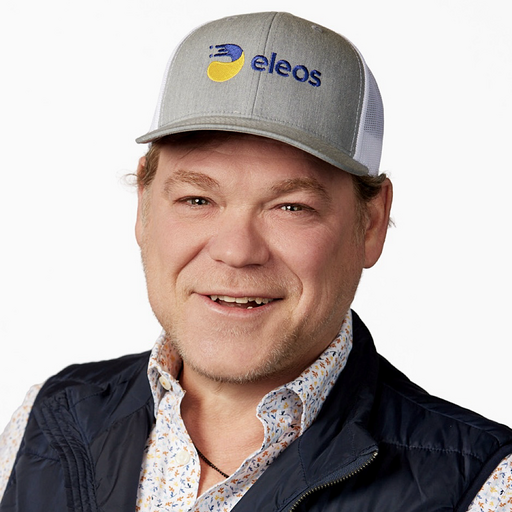
While this year’s Home Care 100 was my first as a member of the Eleos team—and Eleos’ first as an organization—it was actually my 7th career appearance at this revered industry event. As always, it reminded me of what makes this community special. But it also reinforced why the conversations happening right now feel different than they did just a few years ago.
If you’re looking for pomp and circumstance (and a whole lot of flashy buzzwords), Home Care 100 is the wrong place to be. I’m always amazed by the down-to-earth vibe of this conference. It’s truly just a room full of real people carrying real—and often heavy—responsibility: For patients and families, for clinicians and care teams, and for organizations operating under increasing pressure.
What sticks in my mind aren’t just sessions or the slide decks, but the quality of dialogue. It’s refreshingly honest and deeply rooted in lived experience.
This year, we heard less about “AI adoption” and more about workforce sustainability, speed to care, trust, and workflow fit. Leaders aren’t shopping for technology merely to check a box—they’re thinking critically about where to invest, which workflows to start with, and who they trust to deliver real impact. The conversations were candid, collaborative, and grounded in a shared commitment to improving care at home.
Real talk > Abstract promises
Across dozens of one-on-one conversations with executives and clinical leaders, a consistent theme emerged: Leaders are not looking for an abstract “what’s next in care at home.” They are focused on what actually works—today—in real workflows, under real constraints.
The discussions were collaborative instead of transactional. People showed up with humility, openly sharing what’s working, what isn’t, and where they’ve been burned before. There was a shared understanding that the challenges facing home health and hospice—workforce strain, margin pressure, and regulatory complexity—are too big for any one organization to solve alone.
That distinction is important, because trust is not built through pitches; it’s built through listening, shared problem-solving, and mutual respect.
Here’s a quick rundown of my main takeaways from the conversations I had:
1. Workforce pressure is the root constraint.
Nearly every conversation came back to the same reality: In 2026, workforce sustainability isn’t going to happen with a business-as-usual approach.
Leaders spoke candidly about burnout, retention challenges, and the growing burden of after-hours documentation—often referred to as “pajama time.” The ripple effect of that burden goes way beyond staff morale; it creates serious downstream risk. Delayed or incomplete documentation contributes to audit exposure, unbilled revenue, and forced discharges, even when care is clinically appropriate.
Importantly, leaders were not asking for tools that require clinicians to do more. They were looking for ways to reduce friction, improve consistency, and give personal time back to staff—without forcing behavior change or adding parallel workflows.
2. Speed to care is a strategic lever.
Another theme that came up again and again was speed to care (e.g., the gap between referral or hospital discharge and start of care).
Leaders described this gap not just as an operational issue, but as a business and care quality issue. Delays leave revenue on the table, strain already-stretched teams, and erode trust with critical referral partners. In a world where hospitals and payers increasingly evaluate post-acute partners based on reliability and outcomes, timeliness is a crucial signal of quality.
And it’s rarely a single breakdown causing these delays. It’s fragmented data, limited visibility into patients pre-discharge, and disconnected intake, scheduling, and documentation workflows. Solving for speed requires better coordination and support across the care continuum—without adding more manual work.
3. AI interest is real—and so is scrutiny.
AI came up in nearly every conversation I had, but not in the way you might assume based on recent headlines.
Leaders are not chasing AI for AI street cred. Many are recovering from prior rollouts that promised efficiency but delivered frustration, poor adoption, and/or new risks. So, AI skepticism isn’t about the technology itself—it’s about vendor trust.
What executives are open to is workflow-native, low-lift solutions that prove value early, fit into how clinicians already work, and hold up under audits. They are starting with specific, high-burden processes like documentation, care/note quality review, and first and last visits—and expanding only once trust is established. (And quantifiable ROI certainly doesn’t hurt.)
In other words, leaders aren’t buying platforms on day one. They’re choosing partners carefully—based on evidence, humility, and alignment with real-world care delivery.
4. Relationships matter.
One of the most meaningful parts of the week was reconnecting with customers and long-time colleagues. We had the space to go beyond surface-level check-ins—to have substantive conversations about what’s changing inside care at home organizations and how expectations are evolving.
The friendships are real. The respect is mutual. And the shared goal is clear—to make care at home more sustainable, reliable, and human.
That sense of community is what makes Home Care 100 so special. It’s also what makes progress possible. And it’s what drives us at Eleos to work even harder.
The final note on HC100
Home Care 100 filled me with gratitude: Gratitude for the raw openness of the conversations, for the leaders willing to spend their time with me, and for the opportunity to be part of a community driven by impact rather than ego.
The future of care at home won’t be shaped by the loudest ideas. It will be shaped by thoughtful collaboration, practical innovation, and a relentless focus on supporting the people who deliver exceptional care every day.
We’re grateful to be part of that conversation—and to keep learning alongside those leading the way.